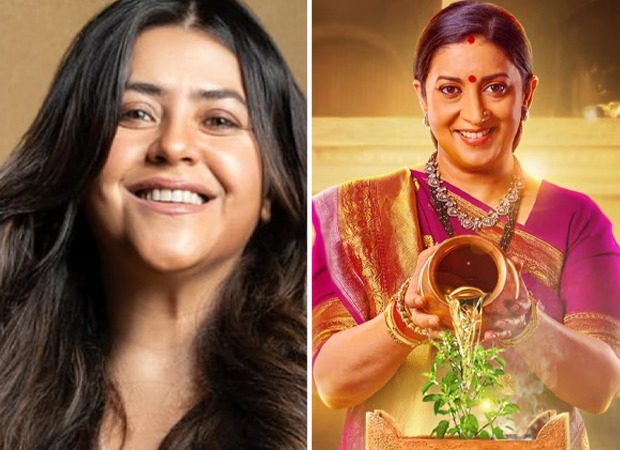
Veteran playback singer Shreya Ghoshal has addressed the online reaction to her recent comments about Chikni Chameli, the hugely popular song from the 2012 film Agneepath. While she stressed that she is “not embarrassed” about having sung the track, she also made it clear that she wouldn’t choose to record similar songs today, a stance that has sparked debate among fans.
In a conversation on entrepreneur and podcaster Raj Shamani’s show, Shreya explained that her outlook on song choices has evolved over time. The singer said that after Chikni Chameli became a hit, she was offered a number of tracks with lyrics she felt were overtly objectifying. She revealed that, on one occasion, a composer friend suggested lines such as “make me into chicken and eat me” or “hold me like this,” which made her uncomfortable enough to turn them down.
Reflecting on her experience with Chikni Chameli itself, Shreya said the version that made it into the film was more subtle than earlier drafts, but she admits she didn’t fully grasp the meaning of some lines at the time. Despite that, she said, “Yes, I did perform it. I like that song. I think it’s good. But I won’t record songs like that anymore.” She emphasised that she isn’t ashamed, the song is part of her body of work and something she continues to “own.”
Shreya’s comments have ignited discussion online because she reportedly still performs Chikni Chameli at concerts, including in front of young audiences. Addressing that, she acknowledged that hearing little girls dance to its lyrics can feel awkward, but maintained that the song itself has artistic value and remains one she is connected to.
Indian award-winning actor, producer, and UN Goodwill Ambassador Dia Mirza marked World Wildlife Day with a heartfelt call to protect tigers and the forests they inhabit. Sharing a message from Tiger Fest with the Kids For Tigers initiative, she reflected, “When young voices rise together, something shifts. The tiger becomes more than a symbol, it becomes a reminder that forests birth rivers, hold our soil, steady our climate, and quietly protect every breath we take.”
She further added, “These children understand something many adults forget: clean air, clean water, healthy soil and a safe climate are not luxuries they are life itself.”
She also mentioned “Saving the tiger is not about saving a species alone. It is about protecting the delicate web of life that protects us.”
A long-standing advocate for conservation, Dia Mirza has been associated with Sanctuary Nature Foundation for nearly two decades, with the Kids For Tigers programme remaining especially close to her heart. The actress also serves as a United Nations Environment Programme Goodwill Ambassador and United Nations Secretary-General’s Advocate for the Sustainable Development Goals. She is also Ambassador for the Wildlife Trust of India, an eco-investor, and a committed voice for climate action and biodiversity preservation.
Punjabi star Karan Aujla has found himself at the centre of an unexpected controversy after his recent India concerts, with fans criticising the organisation and management of his P-Pop Culture India Tour shows in New Delhi and Mumbai.
The tour kicked off on February 28 at Delhi’s Jawaharlal Nehru Stadium with a massive crowd, reportedly over 75,000 fans, and a high-energy performance that included Aujla ziplining across a 50-foot-high custom stage and performing hits like Softly, Tauba Tauba and Boyfriend. However, the excitement was overshadowed online by videos showing chaotic scenes at entry gates, long queues without clear crowd direction, and even a violent brawl in a VIP lounge, fuelling complaints about poor planning and safety lapses at the Delhi show.
The controversy deepened with Aujla’s March 3 Mumbai Holi Edition concert at MMRDA Grounds, where several fans took to social media to describe near-stampede conditions, lack of basic amenities such as water and shade, and confusion over band scanners and viewing areas, leading some attendees to label it the “worst concert ever.”
In response to the backlash, Aujla took to Instagram Stories with a photo outside his private jet, writing: “Bombay I think we need to add a night concert. Team Innovation, y’all coming back stronger or what??”, seemingly hinting at a second show to make amends with disappointed fans. The event organisers, Team Innovation, responded with optimism, promising something “bigger and louder.” Amid the uproar, Aujla’s image also drew positive attention in Mumbai when he was seen paying off auto-rickshaw drivers’ fines totalling around ₹22,000, a gesture that went viral and was widely praised by fans across social platforms.
The India leg of the P-Pop Culture Tour will continue with shows scheduled in Ahmedabad, Chandigarh, Indore, Bengaluru, Kolkata, Jaipur, Lucknow and Ludhiana over the coming weeks, leaving organisers and audiences alike hoping for improved experiences ahead.
Actor and model Mandana Karimi has spoken about the ongoing situation in Iran, sharing her concerns about the country’s political future and revealing that she intends to return if there is a change in regime.
In an exclusive conversation with Bollywood Hungama, Karimi was asked about her assessment of developments in Iran and what she foresees in the coming days. “Well, what’s happening? I think 24 hours ago, they actually brought someone to put in the place of Khamenei,” she said.
Karimi expressed hope for a different future for her home country. “And what I see for Iran is a free Iran, where women can do whatever they want, wear whatever they want, and go to whatever university they want to study. And I see Iran, which has a great relationship with the Middle East, that we are not a threat to people, but we are a nation that actually builds the Middle East, and what I see for Iran is the death to this regime, and they have to go,” she added.
When asked if she would consider returning to Iran, Karimi responded decisively. “The moment that they announce that this regime is gone, I’ll go, anyway, my bags are packed, I’m leaving India as well.”
She further confirmed that relocating is part of her immediate plan. “That is the plan because I feel like I’m breaking up with India. It’s very difficult for me, because I came to India when I was really young. India has given me everything, my modelling career, my acting career, and the loves that I had here, the friends that I have, but I feel like I don’t have a voice in India, and this past two months, I’ve never felt so homesick and lonely in Bombay,” she said.
Karimi also stated that her participation in protests and her outspoken stance on Iran have affected some of her relationships. “Unfortunately, because I went to protests, and I was talking about Iran so openly, I lost a lot of so-called friends, and I feel like India has betrayed me in a way. I feel like India has given me what it was supposed to give, now it’s time to move on, and hopefully I’m going to move to Iran.”
Karimi, who built her modelling and acting career in India, said her decision comes after months of emotional strain, as she balances her professional journey with concern for her homeland.
Filmmaker Sooraj Barjatya has weighed in on the ongoing debate around portrayals of masculinity in Hindi cinema, stating that his idealistic romantic heroes and the more intense protagonists seen in recent films are “two sides of the same coin.” In a conversation with Hindustan Times, Barjatya compared characters such as Prem — a recurring figure in his films — with leads from films like Kabir Singh and Animal.
“They are representations of the same men. Itna pyaar to kare koi (Someone must love this passionately). If you look at it, whether it is Kabir Singh, Animal, Prem, or the protagonist from Sangamarmar (his next web series), but itna pyaar to kare. All of them have come through the journeys of their soul. They have their own upbringing and values. But essentially, it is the power of love. I feel they are two sides of the same coin,” he said.
The reference to Kabir Singh and Animal points to a contrast often drawn between Barjatya’s soft-spoken, family-oriented heroes and the more volatile romantic leads of recent years. However, the director maintains that the emotional core — intense, unwavering love — remains central across portrayals.
Barjatya also addressed criticism that his male protagonists are overly idealistic or disconnected from contemporary realities. “Every two to three weeks, people tell me such a world does not exist. Don’t give us this wrong hope. Girls tell me that their parents want this sort of guy for them, and yeh banne band ho gaye hain (These don’t exist anymore). But I say jitne pehle the aaj bhi hain (they exist today too). You just have to find them,” he said.
On the professional front, Barjatya last directed Uunchai, featuring Amitabh Bachchan, Anupam Kher and Boman Irani. His next directorial venture is Yeh Prem Mol Liya, starring Ayushmann Khurrana.
He is currently promoting the romantic drama series Sangamarmar, which streams on JioHotstar from February 26. Backed by his banner Rajshri Productions and directed by Vikram Ghai, the show follows Amrita, played by Sheen Das, as she places family responsibilities above her relationship with Aditya, portrayed by Sourabh Raaj Jain.
Bollywood actress Sushmita Sen and her mother, Subhra Sen, have given their apartment on rent in Mumbai, with a starting monthly rent of Rs. 1.95 lakh, according to property registration documents reviewed by Square Yards on the website of the Inspector General of Registration (IGR) at https://ift.tt/vgCL76t. The deal was officially registered in February 2026.
Goregaon is regarded as one of Mumbai’s fastest-growing and strategically positioned real estate destinations, known for its balanced mix of residential comfort, commercial growth, and long-term investment potential. The locality offers a diverse range of housing options, including modern high-rise apartments, integrated townships, and premium gated communities, attracting working professionals, business owners, and upwardly mobile families. Goregaon benefits from excellent connectivity via the Western Express Highway, SV Road, and the suburban railway network on the Western Line, along with seamless access to the Mumbai Metro.
It also enjoys proximity to key business districts such as Andheri, Malad, and the Bandra Kurla Complex, making daily commutes convenient for corporate executives and entrepreneurs. The presence of major commercial hubs like NESCO IT Park, Mindspace Malad, and Film City further strengthens its appeal as a residential hotspot for professionals across industries. Over the years, several members of the entertainment and business fraternity have also chosen Goregaon and its surrounding areas as their preferred residential base due to its connectivity, infrastructure, and evolving urban lifestyle.
According to property registration documents accessed by Square Yards, the apartment in Oberoi Exquisite, Goregaon, was rented, with a carpet area of 92.5 sq. m. (996 sq. ft.) and a total area of 115.29 sq. m. (1,241 sq. ft.). The deal also includes two car parking spaces and was registered with a stamp duty of Rs. 18,900, registration charges of Rs. 1,000 and a security deposit of Rs. 6 lakhs.
As per Square Yards’ analysis, the lease tenure is set for a period of 36 months. The agreed monthly rent commences at Rs. 1.95 lakh for the first year and increases by 5% to Rs. 2.04 lakhs in the second year. In the final year, the rent rises by a further 5% to Rs. 2.14 lakhs. Accordingly, the cumulative rental value over the entire three-year term is Rs. 73.76 lakhs.
The Viral Fever (TVF) has partnered with Netflix for their upcoming education based show Hello Bachhon. The series gives a message that education, especially higher education, should be a right of every child and should not be limited to the rich. The show stars Viineet Kumar Siingh in the lead and it starts streaming from March 6. In an exclusive interview with Bollywood Hungama, TVF’s founder Arunabh Kumar got talking about Hello Bachhon, their strategy and more.
TVF has consistently captured youth culture with authenticity. What emotional core drove Hello Bachhon?
So, I think when it comes to young adult stories, when you look at the library in India, there’s a lot of stories being told in crime, a lot of this across the genre. But when it comes to this age group of telling stories of, let’s say, 13-year-olds to 20-year-olds, we have had a few of them, some of them we have been fortunate to be part of. But I think coming of age, growing up during adolescence, the kind of emotional complexities that one comes across, the kind of ambitions that one is burdened with, whether it is from the parents, whether it is from their teachers, whether it is themselves sometimes, and I think that has always been a recurring theme. And this story actually combines all of them together with the true story of a teacher who made this possible for so many of them.
I think the backgrounds of students whose story we have dealt with in Hello Bachhon is going to completely surprise and astound people that, okay, there are such people too. One of the things that, in fact, we were told that we always speak of middle India. We do not look at India 3 or Bharat, while we have dealt with them in many stories and shows now, whether it is a show on a village that we have done, or whether it is a show based in Delhi.
But I think this time you will see that we have got a chance, thanks to Alakh’s journey, thanks to PW’s journey, we got a chance to dip into the stories of these students from such diverse, such, sometimes, strikingly underprivileged background, sometimes such part of victim of such, I will say, societal norms that, and then they have been able to come out. And these stories are based on actual anecdotes of people who have learned from PW and Alakh. And they have changed their lives. So I think that is what appealed to us. And yeah, I think that something like this, I don’t think together we have ever told that. And we do not hope this story only touches the emotional core of young Indians in India, but across the globe.
Is this show closer to satire, slice of life, realism or aspirational coming of age storytelling?
Of course, it is not satire, I think. But I wouldn’t say it fits completely in either of the brackets. I think it’s a very highly emotional account of, like it’s there in the teaser, inspired by many, many million stories of. So aspiration is a part of it for sure. But I think it’s very deeply emotional. It’s very conflict heavy. It speaks of real India. Like I said, it’s inspired from true stories of teachers and students. So and they’ve gone through so much in their life. So aspiration can be called as well. But I would not like to bracket the much more broader and much. It deals with a lot more emotional aspects of one’s life and what one goes through while trying to chase their dream. So I would like to take it there.
How has your understanding of youth evolved since your early TVF days?
So, I think I’ll humbly accept that I understand them a little less now maybe because I’m not as young as I used to be when we started 14 years back when I could totally get a lingo, the joke and everything. But I think the reason that some of us founding team members, whether it is me or Vijay and Sherry, who have worked on the show and who also used to say that is this going to be another show that we have done so many times? And Vijay and Sherry said, no, this is very, very different because the kind of realities that younger Indians live in today is very, very different from what we were living in.
So I think humbly I accept that, yes, things would have changed in the last 10-14 years and things have changed. But like I always say that emotions do not change. Aspirations, the modality of aspirations changes, but I think aspirations are still there. Dreams are still there. In the history time, people used to dream of conquering a country. Now they dream of conquering a World Cup or in the world of business. So we try to sort of attribute any story to that axis and identify those parts. And at the same time, we have a very young team who is always there at TVF and Netflix also has a lot of younger people and they keep us, giving us their current North Star to follow.
I would say there was a very random study that Gen Zs have less IQ than Millennials. I do not really subscribe to that because maybe this test has been done by the question paper, which was prepared by a Millennial and that is no longer valid. So I feel it is important to accept that time always changes. That’s the rule of law of nature, law of capitalism, law of technology. And we try and be with the times. We try and identify the emotions because they always are there.
And if you are able to anchor your stories, your characters around that, then rest everything can be figured with research. And that’s how we have kind of been viral in 2012, as well as viral in 2026. And thanks to the team, specifically the younger people, Abhishek Yadav, who has written, Pratish, who has directed, Sherry, who’s our head of originals and Vijay. By the way, I’ll tell you Vijay is the oldest man by age, but the youngest when it comes to energy.
Were you consciously trying to avoid tropes that typically define school or college narratives in Indian cinema?
No, I don’t think we are consciously trying to avoid. I think we are just trying to be authentic and true to what we have seen and what we hear of. There is like, everybody says, there are many India’s in our country. There are people of all economic backgrounds walking on the road or driving on the road. So we just try to pick a segment and try to be honest to them. And whether it is Kota Factory or whether it is Hello Bachhon. If you see Hello Bachcho, you will be surprised of the kind of, you know, I was myself very astounded. So to say the least, with some of the stories that people have made, despite what background they come from.
So we’re just trying to be honest. I think we’re just trying to be very diverse and honest. And once you try and research about other segments, other towns, other backgrounds, then automatically you come across newer material, newer research. And that that gives you new writing, new stories, and they become different from whatever maybe a certain segment has done so far.
With Hello Bachhon, we have actually ourselves felt that we have never really told stories of people from this background. And that that makes us very proud to be associated with the show that makes us creatively very exciting, excited that we are telling this. And with Netflix, you know, they supported us to try and tell the story in the best possible way. And I think we have a story which after watching, you will again say that maybe we have tried to be consciously away from the tropes of even TVF’s lens of storytelling.
In February 2026, Bollywood Hungama had reported that the highly anticipated trailer of Dhurandhar: The Revenge will be launched on March 5 at Mumbai’s iconic Nita Mukesh Ambani Cultural Centre (NMACC). We have now learned that there is a slight change in the plan.
A source told Bollywood Hungama, “Dhurandhar: The Revenge’s trailer will now come earlier than expected. It is now likely to be unveiled on Tuesday, March 3, on the auspicious occasion of Holi. However, no event will take place and the makers will drop the promo digitally.”
The trailer of the first part was also launched at NMACC in the presence of 2000 Ranveer Singh fans. It was one of the grandest events of 2025 and became a huge talking point.
Dhurandhar stars Ranveer Singh, Akshaye Khanna, Sanjay Dutt, R Madhavan, Arjun Rampal, Sara Arjun and Rakesh Bedi. The first part told the story of an Indian spy who infiltrates into Pakistan’s criminal syndicate and political system and creates havoc. It opened well at the box office but, in a few days, it became a sensation. Its second week collections were more than that of the first and the action musical entertainer ultimately emerged as the highest grossing film of Bollywood. As a result, the buzz is tremendous for the sequel, which releases on March 19. Both parts are directed by Aditya Dhar and produced by Jyoti Deshpande of Jio Studios and Aditya Dhar and Lokesh Dhar of B62 Studios.
Interestingly, Dhurandhar: The Revenge will have a gigantic clash at the box office with Toxic: A Fairy Tale for Grown-Ups. Directed by Geetu Mohandas, it marks the return of Yash of KGF fame and also stars Kiara Advani, Nayanthara, Huma Qureshi, Akshay Oberoi and others. The trailer of this mass-appealing flick will be unveiled on March 8 in Bengaluru at a grand event.
The Screenwriters Association’s (SWA) first event of the year, Vartalaap, opened with an unfiltered and craft-focused conversation with filmmaker Sriram Raghavan, who reflected not only on his films but on the writing decisions, missteps and professional relationships that shaped his journey.
Moderated by filmmaker Satyanshu Singh, the session moved fluidly between nostalgia, practical screenwriting advice and candid admissions, offering members a rare look into the working mind of a director often associated with the modern Hindi thriller.
The event began with a rare screening of Raghavan’s FTII student diploma film The Eight Column Affair. The filmmaker then went on a trip down the memory lane, talking about how long before his breakout directorial debut with Ek Hasina Thi, he was working in Mumbai covering the film industry in his early days. The job took him from Stardust to a trade magazine.
“If you look at the articles today, you can blackmail me! They used to be so bad,” Raghavan joked. While his stint as a journalist didn’t last long, he met filmmaker Mukul Anand and instantly knew he wanted to make movies.
“I had asked Mukul Anand, ‘Should I join the film institute or work with you?’ He told me if I work with him it’ll take me five years to make my first film, whereas it’s be quicker to do the same after FTII. That said, it took me 17 years to make my debut!” Raghavan laughed.
But before his feature directorial materialised, Raghavan worked on TV, writing for shows, especially the long-running CID. He recalled how the show’s producer BP Singh would call him to write episodes for CID and he had to wing a story in one night. “But writing for CID ensured that the next two months’ money would be sorted,” he said.
For a filmmaker widely regarded as a master of the thriller genre, Raghavan surprised many by stating that he never treated logic as his guiding principle. Recalling advice from Ram Gopal Varma during the making of Ek Hasina Thi, he said: “Don’t worry about logic, shoot with conviction.” At the same time, Raghavan was candid about missteps. Speaking about Agent Vinod, he admitted that he made a mistake at the writing table for the big-budget actioner headlined by Saif Ali Khan and Kareena Kapoor.
“I focused more on individual sequences rather than the whole story and a solid character, which would have been the spine of the film,” he said, noting that a strong, cohesive narrative must anchor even the most stylish set pieces. The lesson, he emphasised, was one he carried forward into later projects.
A highlight of the evening was Raghavan’s recollection of his creative equation with Dharmendra. “Dharamji was among the first people I narrated Ikkis to and he loved it unconditionally,” he said, referring to his war-drama that marked the final screen appearance of the legend.
He also revealed that during the writing stage of Agent Vinod, he had conceived a role for the head of RAW with Dharmendra in mind. The film, he explained, initially had younger and older narrative tracks, and discussions were held at the scripting stage — including meetings with Zeenat Aman for a key part in the Russia portion. The track was eventually not pursued.
The conversation also turned to the industry’s shifting landscape and the oft-repeated anxiety around theatrical decline and creative relevance, a concern Raghavan dismissed with characteristic ease.
“I don’t have that fear. There are many films today that I don’t want to make, can’t make or don’t even enjoy. But every year I find five or ten films I love. Sometimes you wish you had got that story. That happens to me a lot. I watched Marty Supreme. I loved it, but it’s not a story I would tell. I don’t feel irrelevant.”
He acknowledged that he has seen ups and downs in his career but stressed the importance of maintaining meaningful relationships with producers. “It is important to develop this bond with producers. They are the ones putting money behind one’s craft.”
For writers navigating an unpredictable industry, his advice was pragmatic: in times when films may not work commercially, a “fabulous script” will always hold a screenwriter in good standing. “No producer will say no to it,” he said, urging writers to keep honing their craft.
The session was attended by SWA President Charudutt Acharya, Lyricist Raj Shekhar (General Secretary, SWA), filmmakers Hitesh Kewalya, Anu Singh Chaudhary, Hardik Mehta, Arati Kadav, Amrit Raj Gupta & writers Arshad Syed, Gunjit Chopra, Vibha Singh, among several members of the writing community.
In a significant development for the Indian film industry, leading banner Hombale Films has officially announced its entry into the overseas distribution arena. Known for backing some of the most successful pan-India blockbusters in recent years, the production house is now expanding its footprint with a structured international distribution strategy aimed at taking Indian stories to a wider global audience.
Over the past few years, Hombale Films has redefined commercial Indian cinema with large-scale spectacles such as KGF: Chapter 1, KGF: Chapter 2, Kantara, Kantara: Chapter 1, Salaar and Mahavatar Narasimha. These films not only performed strongly at the domestic box office but also built substantial audiences overseas, reflecting the growing appetite for Indian cinema across markets.
With this new vertical, the company aims to establish a focused and professional international distribution network. The move is being positioned as a strategic evolution rather than a limited in-house extension. Importantly, the overseas distribution initiative will not be restricted to films produced by Hombale Films. Instead, the banner plans to collaborate with filmmakers and production houses across India, facilitating the global release of diverse stories spanning languages and genres.
Announcing the development on Instagram, Hombale Films shared a statement that read, “Cinema connects hearts beyond every distance. From India to the world, our stories travel far and wide. With gratitude and quiet excitement, Hombale Films steps into Overseas Distribution carrying the spirit of Indian cinema beyond borders, across industries, and into hearts everywhere”.
The expansion signals a broader ambition — to strengthen the global positioning of Indian cinema through streamlined distribution strategies and deeper market penetration. As international audiences continue to engage with Indian films across theatrical and emerging markets, this move places Hombale Films at the forefront of shaping how Indian stories travel worldwide.
By entering the overseas distribution space, the banner reinforces its commitment to scaling Indian cinema globally, ensuring that stories rooted in local culture continue to find resonance across continents.
PVR INOX Limited, India’s largest and most premium cinema exhibitor is set to bring back the much-loved romantic comedy Hasee Toh Phasee in association with Dharma Productions on March 6. Directed by Vinil Mathew and produced by Karan Johar, Vikas Bahl, Vikramaditya Motwane and Anurag Kashyap, the 2014 film is a refreshingly unconventional love story that beautifully balances quirk, chaos, and heartfelt emotion. Starring Sidharth Malhotra and Parineeti Chopra, Hasee Toh Phasee follows the unlikely romance between a confused groom-to-be and a brilliantly eccentric scientist, unfolding over a whirlwind week leading up to a wedding. With its sharp writing, viral dialogues, memorable music, and endearing performances, the film has earned a special place in the hearts of audiences, making its theatrical re-release a nostalgic treat for fans and a delightful discovery for a new generation.
Talking about the re-release, the producer of the film, Karan Johar, said, “Hasee Toh Phasee has a very special and warm place in my heart. It wasn’t a conventional love story; it was awkward, unpredictable, and beautifully flawed, much like love itself. A love story of misfits, as I fondly call it, the film celebrates the idea that you don’t fall in love with perfection; you fall in love with chaos, with individuality, with someone who turns your world delightfully upside down. Watching audiences rediscover that magic in cinemas again is exciting, and I am looking forward to its re-release at PVR INOX Limited.”
Niharika Bijli, Lead Strategist, PVR INOX Limited, said, “It’s always wonderful to collaborate with the Dharma team, and we are excited to bring back Hasee Toh Phasee. The film beautifully captured the quirks, vulnerabilities, and authenticity of modern relationships, making it a story that continues to resonate with audiences. At PVR INOX, we believe in celebrating films that leave a lasting emotional imprint, and with the film’s dialogues going viral in recent times and its music still a favourite at every party, we are excited to see how audiences respond to it once again on the big screen.”
Speaking about the re-release of the film, the director, Vinil Matthew, said, “When we made Hasee Toh Phasee, we wanted to tell a love story about two people who don’t quite fit in – who are emotionally messy but deeply sincere. It was never meant to be a conventional romantic comedy; it was about embracing imperfections and finding connection in the most unexpected places. The film explored a range of themes, from dysfunctional families and the weight of their expectations to self-worth. From the loneliness of urban life to ultimately choosing love. Over the years, I’ve been overwhelmed by how audiences have continued to discover the film and relate to its themes. The re-release of the film is incredibly special; there’s something magical about experiencing these characters and their journey on the big screen—the humour, the silences, and the emotion all land differently. I am grateful the film gets to be rediscovered in theatres at PVR INOX.”
Over the past year and a half, PVR INOX Ltd. has transformed the cinematic calendar through a strategic and passionate commitment to bringing iconic films back to theatres. These re-releases have done far more than fill screens, they have reignited conversations, drawn multi-generational audiences into cinemas, and reaffirmed the emotional power of watching great films collectively. Accounting for over 4% of total footfalls, this initiative stands as a testament to the enduring appeal of cinema that transcends time. As audiences increasingly seek meaningful theatrical experiences, PVR INOX’s re-release curation offers both nostalgia and discovery, a chance for longtime admirers to reconnect with films that shaped them, and for newer audiences to encounter these stories in their most immersive form.
Hasee toh Phasee is re-releasing on March 6 at PVR INOX.
One of India’s most liberal and independent-minded thinkers and artistes, Javed Akhtar has spoken out strongly against the Taliban’s new laws that legitimize domestic violence. The Taliban has reportedly legalized wife-beating, provided no bones are broken.
Reacting to what he describes as an inhuman endorsement of violence, Javed Saab said, “The impunity with which this so-called law legalizes violence is shocking to us not to them (the Taliban). I beseech the muftis and mullahs of India to condemn it unconditionally, because it is all being done in the name of their religion. Whatever the reason for this barbaric decree, let us not give any credence to it.”
Javed Saab emphasized that human values and basic decency are non-negotiable. “It’s not about religion; it is about human decency. Violence being endorsed in any form and I include movies must be condemned by all right-thinking human beings.”
Speaking about violence in cinema, he added, “We (Salim Khan and I) never condoned or glorified violence of any kind least of all violence against women. The women characters in our screenplays, be it the blockbuster Sholay or the unsuccessful Imaan Dharam, were treated with due respect and dignity. Cinema has a huge responsibility towards society to project the right values. And by ‘right’, I mean those values that give dignity, respect and a voice to all sections of society.”
Actor Pooja Bhamrrah recently opened up about her experience working with Ranvijay Singha in Kohrra 2, shedding light on their intense on-screen confrontation as well as their off-screen camaraderie.
In a recent conversation with Bollywood Hungama, Bhamrrah spoke about the physically charged scene between their characters that sparked strong reactions online. She revealed that the sequence was carefully prepared during workshops and executed under the supervision of an action director to ensure safety. Calling it her first time performing such a heavy physical altercation, the actor admitted the team was conscious of not letting the moment appear exaggerated. Emphasising the importance of trust while filming intense moments, she noted, “In acting, give and take is very important. If you get someone who is that committed and that good, you just want to give more.”
Bhamrrah also shared an interesting behind-the-scenes detail; she had suggested performing a portion of the scene “for real” to enhance authenticity. However, director Sudip Sharma discouraged the idea, reminding her that “there’s a reason it’s called acting.” She said his measured approach helped maintain both safety and emotional control during the shoot.
Beyond the demanding scene, Bhamrrah was full of praise for her co-star, describing him as “a true gentleman” and “one of the kindest human beings” she has met. She shared that what stood out most was how safe he made her feel during emotionally heavy sequences. “What you see is what you get with him,” she said, adding that he was both professional and deeply considerate on set.
Their professional bond was also visible off screen. Ranvijay recently shared a post about Kohrra on social media, praising Bhamrrah and calling her “locked in” during performances. Reacting to the gesture, she admitted she was taken by surprise. “He didn’t need to do that, but he did. It was really overwhelming,” she said, adding that such appreciation from a co-actor meant a lot.
For Bhamrrah, working with Ranvijay was defined not just by the intensity they brought to screen, but by mutual respect and generosity behind the camera.
Ahead of its February 27 release, The Kerala Story 2: Goes Beyond has sparked fresh controversy after filmmaker Anurag Kashyap strongly criticised the project, prompting a sharp response from director Kamakhya Narayan Singh.
The sequel to The Kerala Story revisits the contentious subject of alleged forced religious conversions of young women. According to the makers, the film draws from incidents documented within India’s legal system and aims to present what they describe as an uncomfortable social reality. The film is directed by National Award-winning filmmaker Kamakhya Narayan Singh and produced by Vipul Amrutlal Shah under Sunshine Pictures.
Kashyap publicly dismissed the film, calling it “bakwas” and “propaganda,” and used strong language to criticise its narrative and intent, particularly a scene in the trailer in which one of the leads is shown being forcefully fed beef. His remarks quickly circulated on social media, reigniting debate around the franchise.
Responding in a video statement, Singh defended his film and accused Kashyap of misrepresenting its purpose. He argued that the issue at hand was not about what is depicted onscreen, but about consent and coercion. In a separate note, Singh wrote that debates should be grounded in “facts and data” rather than labels, adding, “Aapka to jhooth bhi creative freedom aur hamara sach bhi propaganda.”
Dear Anurag sir,
मुद्दा ये नहीं है कि फिल्म में क्या दिखाया गया- खिचड़ी, बीफ या कुछ और।असल सवाल है consent और coercion।
किसी की मर्जी के खिलाफ तो खिचड़ी भी नहीं खिलाई जा सकती, तो अगर कोई फिल्म जबरन बदलाव या दबाव की बात उठाती है, तो उसे नफरत फैलाना कह देना intellectual… pic.twitter.com/1bIIaYyA7I
Singh also referred to Kashyap’s earlier work, including The Girl in Yellow Boots, questioning his criticism of the sequel’s subject matter.
Actor Prakash Raj was among others who had earlier raised concerns about the film’s theme and messaging.
The Kerala Story 2: Goes Beyond stars Ulka Gupta, Aditi Bhatia and Aishwarya Ojha in lead roles. The film is scheduled for release on February 27 and will also be released in Kannada and Telugu.
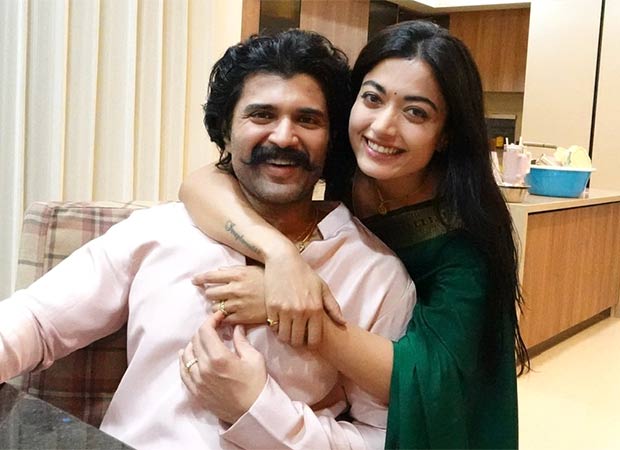
In what is being described as one of the most anticipated celebrity weddings of the year, Vijay Deverakonda and Rashmika Mandanna have officially named their upcoming nuptials ‘The Wedding of VIROSH’. The announcement came with a personal note from the couple, acknowledging the role their fans have played in shaping their journey together.
The name ‘VIROSH’ — a blend of Vijay and Rashmika — was originally coined by fans several years ago. Over time, it became a popular moniker among their supporters on social media and at public events. By choosing to adopt the fan-created name for their wedding, the couple has turned a personal milestone into a shared celebration with their admirers.
Sharing a personal note, the couple addressed their fans as “Our Dearest loves” and continued, “Before we made any plans, before we chose anything for ourselves— you were already there. With so much love, you gave us a name. You called us ‘VIROSH’. So today — with full hearts, we name our coming together in your honour. We would like to name it — ‘The Wedding of VIROSH’.” “Thank you for holding us with so much love. You are a part of us — always. Biggest hugs and full love!”, they concluded.
The gesture has been widely appreciated by fans, many of whom have followed their journey since their early collaborations. By formally recognising the fan-given identity, the couple has reinforced the bond they share with their audience.
According to reports, Vijay and Rashmika are expected to tie the knot on February 26 in an intimate ceremony in Hyderabad. A larger reception is likely to take place on March 4, following an invitation that went viral online a few days ago. Earlier reports had suggested that the two had a low-key engagement in October, although neither actor publicly confirmed or denied the speculation at the time.
On the professional front, the pair are also set to reunite on screen for the third time in Ranaabali, a period drama slated for release later this year. As wedding preparations gather momentum, ‘The Wedding of VIROSH’ is already trending across social media, with fans eagerly counting down to the big day.
The makers of Toxic: A Fairy Tale for Grown-Ups have finalised a music rights deal with Zee Music Company, marking a significant collaboration ahead of the film’s theatrical release in 2026. The film, headlined by Yash, is produced by KVN Productions and Monster Mind Creations.
As part of the agreement, Zee Music Company will acquire and distribute the film’s soundtrack across multiple languages, including Hindi, Kannada, Telugu, Tamil and Malayalam. The move aligns with the film’s multilingual release strategy and wider rollout plans.
The soundtrack will feature contributions from multiple composers. Ravi Basrur will compose one track along with the film’s background score, Vishal Mishra will create four songs, while Tanishk Bagchi will contribute one track co-composed with Arslan Nizami and Faheem Abdullah. The makers indicate that the album has been designed to reflect the tone and scale of the film’s narrative.
Speaking about the association, Sujal Parekh, CBO, Zee Music Company, said, “Toxic, the film, represents the true spirit of pan-India cinema — a story, a scale, and a vision that transcend language and regional boundaries. We are proud to bring its entire soundtrack across Hindi, Kannada, Telugu, Tamil, and Malayalam under one unified platform, ensuring a seamless and powerful nationwide musical rollout. The album has been crafted to connect emotionally across markets while retaining a contemporary, mass appeal that resonates strongly in today’s streaming-driven ecosystem. With its scale, intensity, and cross-cultural soundscape, the music of Toxic is poised to become a unifying anthem for audiences across India.”
Venkat K. Narayana, Chairman of KVN Productions, added, “Toxic demands a soundscape that’s bold, disruptive, and truly unforgettable. At KVN, we’ve always believed that music isn’t just an accompaniment to cinema — it’s the pulse of it. And in Zee Music, we’ve found a partner who not only understands that vision but matches it with the same passion and scale. This collaboration is the start of a long-term relationship between KVN and Zee — built on shared ambition and a collective hunger to push cinematic music into uncharted territories. Together, we want to redefine how music travels with cinema — not just as a soundtrack, but as an experience that lives far beyond the screen.”
The film’s teaser, which introduced Yash’s character Ticket, has generated significant online discussion. Written by Yash and Geetu Mohandas and directed by Mohandas, Toxic has been shot in Kannada and English, with dubbed versions planned in multiple languages. The film is scheduled to release in theatres on March 19, 2026.
Vijay Varma has set social media abuzz after hinting at a possible new collaboration with Excel Entertainment. While no official announcement has been made, the post has led to speculation about what the banner—known for backing character-driven and genre-focused content—might be planning next with the actor.
Sparking the buzz was recent social media post. Vijay recently took to Instagram Stories to share a picture of a card and wrote, “@excelmovies exciteddd about this”, triggering curiosity among fans and industry watchers alike. Vijay has previously collaborated with Excel on multiple projects, each contributing to his growing presence across film and streaming platforms.
In Gully Boy (2019), produced by Excel Entertainment, Vijay played Moeen, the conflicted friend and occasional mentor to Murad. His portrayal of a mechanic-cum-carjacker navigating loyalty and ambition stood out among the ensemble cast. He later became part of the crime drama series Mirzapur, where he gained significant attention in Seasons 2 and 3 for playing the twin brothers Bharat Tyagi and Shatrughan Tyagi. His entry added a new dynamic to the narrative. However, it remains unclear whether he will feature in the upcoming Mirzapur film that is currently in development.
Vijay also collaborated with Excel on the series Dahaad, where he portrayed Anand Swarnakar, a seemingly mild-mannered man leading a double life as a serial killer. The role marked a departure from his earlier characters and was widely discussed following the show’s release.
Given this track record, the latest Instagram hint has prompted discussions about whether the new venture will fall within the crime-thriller space or explore a different genre altogether.
Beyond this potential Excel project, Vijay Varma’s lineup remains busy. He is set to headline Matka King, directed by Nagraj Manjule, a period crime drama centred on the ‘matka gambling’ network. He will also feature in Family Business, directed by Hansal Mehta, where he is expected to share screen space with Anil Kapoor in a corporate drama revolving around power and family dynamics. Additionally, he is part of Lust Stories 3.
While details about the new Excel Entertainment project remain under wraps, Vijay’s brief social media tease has been enough to generate anticipation about what could be his next on-screen outing.