

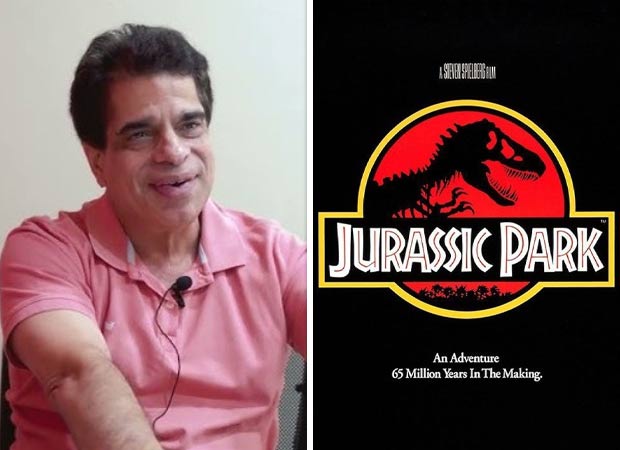
Shakti Samanta’s son, Ashim Samanta, has made his mark as a film and television director and producer. But not many are aware that he is the ‘dubbing king’ of India. He was the one who worked on the dubbing of Jurassic Park (1994), the first ever Hollywood flick to be dubbed in India. Since then, he has consistently handled dubbing for some of the biggest Hollywood titles, and in recent times, his workload has only grown with the surge of OTT content. In an exclusive interview with Bollywood Hungama, Ashim spoke at length about this fascinating journey.
How did you get into the dubbing field and dubbing for Hollywood films?
I started a dubbing studio in 1986. At that time, I did a lot of research on which equipment would be the best. I went down South and checked equipments in Prasad Labs. Though it cost 20% more, I still went ahead. Luckily, it paid back very well. It was a time when everybody wanted to dub at our studio.
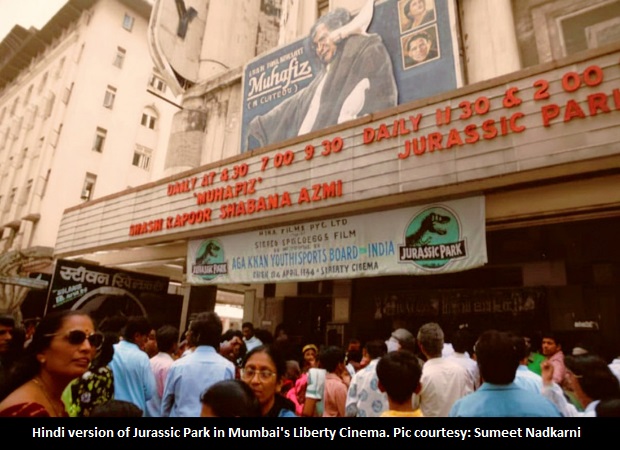
In 1993, out of the blue, I got an offer from United International Pictures. They were distributing most of the Hollywood films at that time. They wanted to dub Jurassic Park in Hindi, Tamil and Telugu. It was the first ever Hollywood film to be dubbed in the country. Leela Ghosh was the dubbing coordinator and director while I was present throughout the whole process. My father was also there and all of us were excited to do something new. To convey the same feelings in different regional languages for the Indian audience was a challenge, especially when you do it for the first time.
Thankfully, we did it very successfully and Jurassic Park performed exceptionally well. And since 1993, all the studios have stuck with us! We have worked hard and ensured that the quality of the dubbing is satisfactory. They, too, have respected our hard work.
How much were you paid for dubbing Jurassic Park?
For Jurassic Park, we were paid Rs. 3.5 lakhs for the Hindi version. I spent Rs. 3.60 lakhs on the dubbing process. So, I faced a loss of Rs. 10,000. I joked at that time that I was the only person in the whole world who had lost money while working on Jurassic Park, while everyone else associated with the film made tons of money!
But then, the studio decided to have an Urdu version for Pakistan. They told us that a dialogue writer from Pakistan will watch the film and suggest which portions to be re-dubbed. They further informed me that they would pay us Rs. 1 lakh for this version. The writer came down, saw the film and asked for re-dubbing of just 4 lines. So, we spent some Rs. 10,000 in dubbing those 4 lines and were paid Rs. 1 lakh. That’s when I said, ‘Now, I am in the plus finally’!
Now it must be a profitable venture…
It is not profitable if you work on just 1 project. But since we work on so many films, it has become profitable. The margins are very little, but the turnover is good.
Did you have any background in dubbing before opening your studio?
Yes. We were the first ones to dub Aradhana (1969) in Bengali. It was a brilliant experience. Amanush (a bi-lingual in Hindi and Bengali) clicked in a big way in 1975. Hence, Dad decided to dub Aradhana in Bengali in 1975, though six years had passed since its release in Hindi. I had finished my graduation and so, I was attending the dubbing sessions. So, you can say that my first project in the film industry was the dubbing of Aradhana. Fortunately, the dubbed version of Aradhana also did very well.
In fact, because of its success, the Bengali film industry banned dubbing of Hindi films as they feared that the local Bengali films would be affected. Many years later, this ban was lifted after a case was filed in the Supreme Court. The Court passed a verdict that a film can be dubbed in any language.
How many films have you dubbed until now?
I have lost count (smiles). If we dub 10 theatrical films a year, then we must have dubbed 350-400 films by now. But for OTT, it will be in thousands. That is the bulk of our work.
Do you use AI and what are your views on it, from a dubbing point of view?
We don’t use AI and it will not be able to do good dubbing. It is fine for news reading or voiceover. But for serials or films, each line has to be adjusted as per the length of the original dialogue. Secondly, the emotions have to come to the fore. You are speaking a different language altogether. We are changing the thought and matter in some places. For instance, an American joke may not land with Indian audiences. So we often localize it by swapping references to places, food, and cultural cues with ones that feel familiar in India. And finally, it’s a creative job. We have a dubbing script but we follow it 80-90%. The rest of the creativity happens while the dubbing is going on. The artist or the dubbing director might come up with inputs, which we incorporate.
This makes a lot of difference and this is not possible with AI. It is like digital music. When you hear 2-3 AI songs, you won’t feel like listening to it. But you can listen to acoustical music for 24 hours. You’ll feel energized. However, digital combined with acoustics might sound fine. Similarly, in films, when you take advantage of AI with real stuff, then it would work. For instance, if someone has not pronounced a word properly, it can be corrected with AI. If someone has mispronounced, say, Karl as ‘Karal’, AI can do the needful. However, we are still not doing it and will require their permission. Hollywood has banned the use of AI in dubbing. That’s why we don’t use it and also, as said before, we won’t get a good output.
The post EXCLUSIVE: Meet Ashim Samanta, who dubbed Jurassic Park, the first Hollywood film to be dubbed in India; reveals, “I was paid Rs. 3.50 lakhs but spent Rs. 3.60 lakhs on the process; I was the ONLY one in the world who lost money on the film!”; adds how Urdu version helped him make a profit appeared first on Bollywood Hungama.
from Bollywood Hungama https://ift.tt/YrMT96f
0 Comments: