

When filmmaker Anurag Singh looks back at Border and even further at Haqeeqat, what stands out for him is not scale alone, but feeling. In his view, Indian war films that endure are the ones that prioritise human experience over spectacle, a philosophy he says continues to guide Border 2.
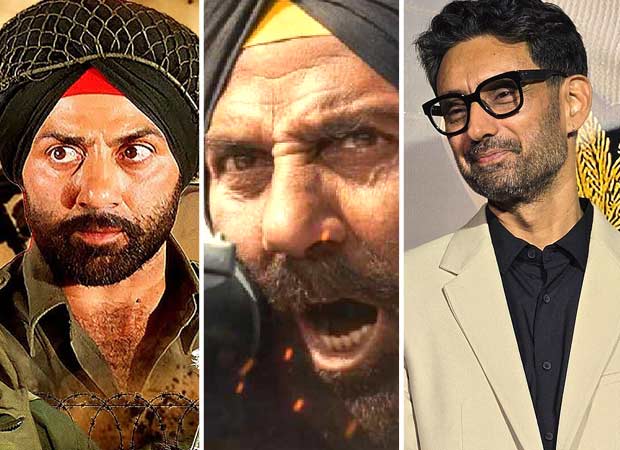
Reflecting on why Border (1997) became iconic, Singh situates it within the limited landscape of Indian war cinema at the time in an exclusive interview with Bollywood Hungama. “When Border came, why did it become an iconic film? We had never seen anything like that,” he says, recalling watching it as a child. “We were kids too. We also went to the cinema to watch it. We had never seen that kind of thing – war, that sort of action which felt very real.”
For Singh, the comparison with Haqeeqat (1964) is inevitable and meaningful. “Before that, there was only one good war film that I remember, which was Haqeeqat,” he says. “The two best war films made in India are Haqeeqat, which had Dharam ji, and the second best is Border, which has Sunny sir. So what a big, what a huge coincidence that is.”
The overlap, he notes, stayed with him during the making of Border 2. But beyond casting or legacy, what unites these films is their grounding in lived emotion. Singh points out that when Border released, audiences were also less exposed to global cinema. “At that time, exposure to world cinema was also limited. We were seeing tanks, fighting in the middle of war, and the kind of characters were larger than life.”
Yet, according to him, it was not the machinery or battle sequences alone that left a mark. “They humanised the soldiers for us,” he says. The film lingered on the everyday realities of soldiers, men caught between duty and home.
Singh emphasises how Border captured a world that feels distant to today’s audiences. “At that time there was no fuss of video calls or anything. You would wait for two months for a letter or some news from home,” he explains. “Someone has passed away or something has happened – and you are finding out months later. We cannot imagine that today.”
Those moments of waiting, loss and uncertainty, he believes, are what anchored the film emotionally. “So when we saw that in the film, you know, everybody fell in love with that, right?” Singh says. “So obviously, apart from the action in Border, the biggest thing was its emotions. The film had its heart, a lot of heart, in the right place.”
That approach, he insists, is central to Border 2 as well. While the sequel expands the canvas—covering land, air and sea, the emotional core remains the priority. “With this film too, for us it was the same, we had to make the film, but the main thing, the mainstay, as he said earlier, is emotion,” Singh notes.
He is clear that scale alone is not the draw. “War is fine, we will scale up the war – we are showing three fronts, Navy, Air Force, land action – but the audience is not coming only to see action,” he says.
Instead, Singh returns to the same idea that defined Haqeeqat and Border. “They are coming to see human beings, our soldiers, our heroes,” he explains. “They are people like us who go on to become heroes with their actions.”
In positioning Border 2 within this lineage, Singh is careful not to frame it as an escalation of spectacle for its own sake. Rather, he sees it as an extension of a tradition in Indian war cinema where emotion—quiet, personal, and often understated, carries as much weight as the battles themselves.
The post EXCLUSIVE: Haqeeqat, Border and now Border 2: Anurag Singh says, “The biggest thing in these films is emotions” appeared first on Bollywood Hungama.
from Bollywood Hungama https://ift.tt/idcJtaZ
0 Comments: